Let AI help them think, not think for them
An AI tailored to their age and supervised as a family. Nolis isn't there to do their homework for them: it guides them step by step to the answer.
And it alerts an adult if it detects they may be at risk.

HolaNolis is an AI chatbot designed for children, teens and young people aged 10 to 20, with built-in parental supervision. Built from the ground up for this age range, HolaNolis applies a 4-layer pipeline to reduce harmful content and tracks crisis signals: when it detects signs of serious risk, it alerts the family immediately by email and, if enabled, by push notification. Less serious signals arrive right away or in a daily summary. The teen always sees their active supervision level. Crisis alerts are free on every plan. Designed with the GDPR, the EU AI Act and, for the US, COPPA in mind. This is not a certification: external legal review is pending.
Commitments you can check
This is how HolaNolis works today, so you can check it for yourselves.
-
Hints before solutions
With homework, Nolis first asks questions and gives hints so they reach the answer themselves. If they insist, it gives them the solution and offers to go over how to get there.
-
An AI that says what it is
The app always shows that Nolis is an artificial intelligence, not a person.
-
Supervision in plain sight
Your child accepts their supervision level when they start and always sees it in the chat. They can request a change from their app; the guardian accepts or declines it.
-
Help resources right in the chat
If Nolis detects signs of suicidal ideation or self-harm, it shows them help resources, such as a helpline, and encourages them to talk to a trusted adult.
-
Safety doesn't depend on the plan
Alerts to the family when there's a risk are included in every plan, including the free one.
No detection system is infallible: it can get things wrong or miss a signal. No alerts doesn't guarantee everything is fine; talking as a family still comes first.
How safety works and its limitsRules we took into account in the design · external legal review pending
- GDPR (EU)
- EU AI Act
- COPPA (US)
- Messages encrypted with a per-user key
How does it work?
Register as a tutor
Create your account in under 2 minutes. You only need an email and a password.
Add your child
Choose the supervision level (light, medium, or full) and send them an invite link.
Nolis accompanies, you stay informed
Your child chats with an AI adapted to their age. You get alerts if there are signs of risk, plus a weekly report.
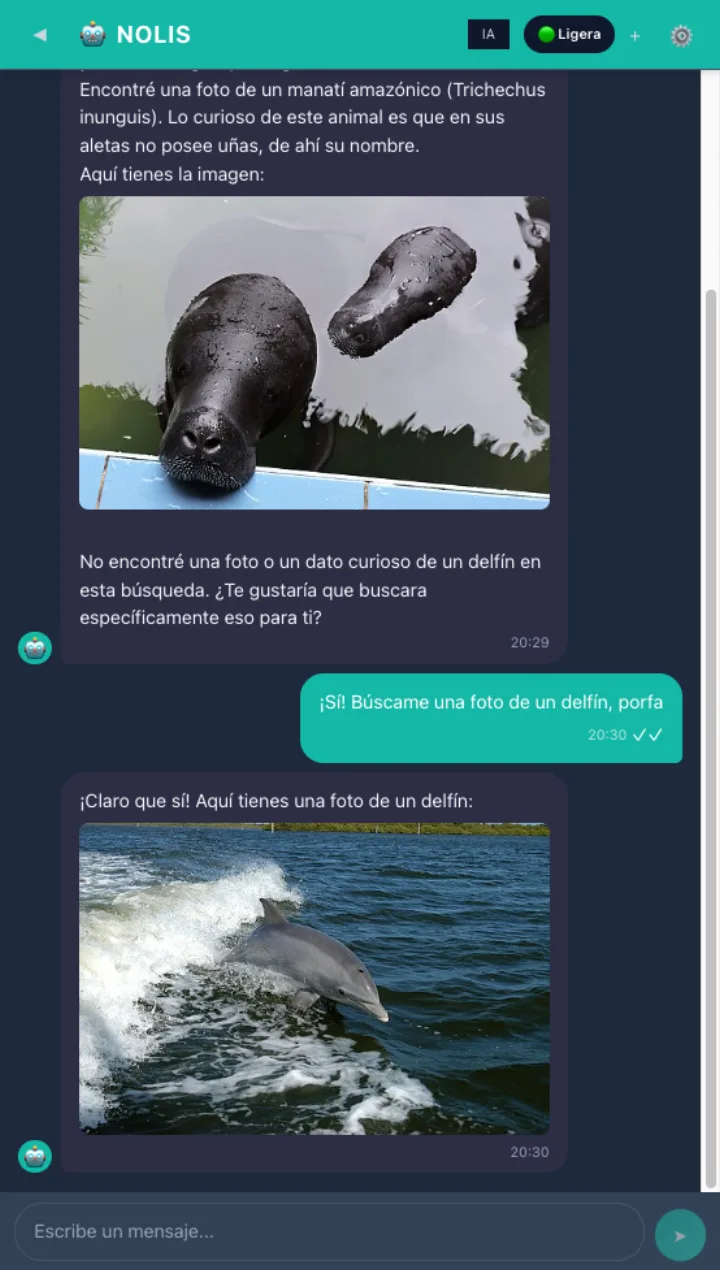
Your child chats with Nolis, adapted to their age
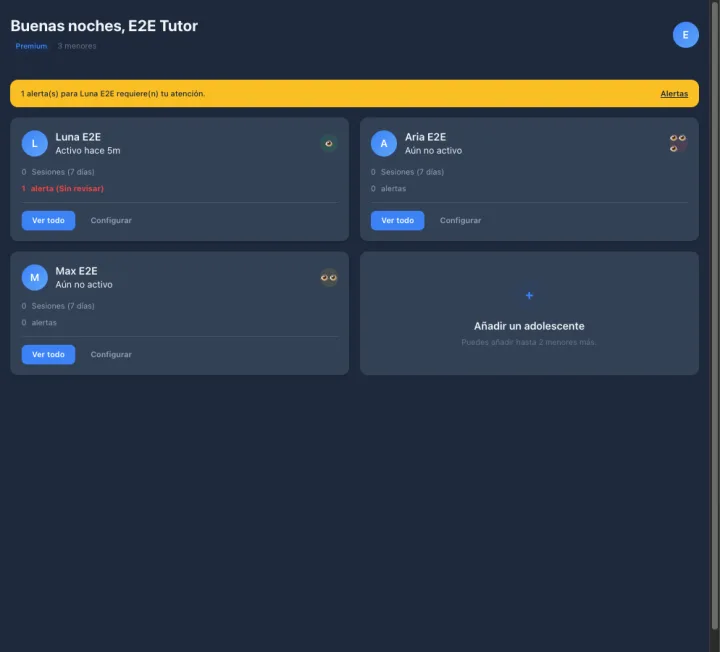
Check alerts and reports from your dashboard
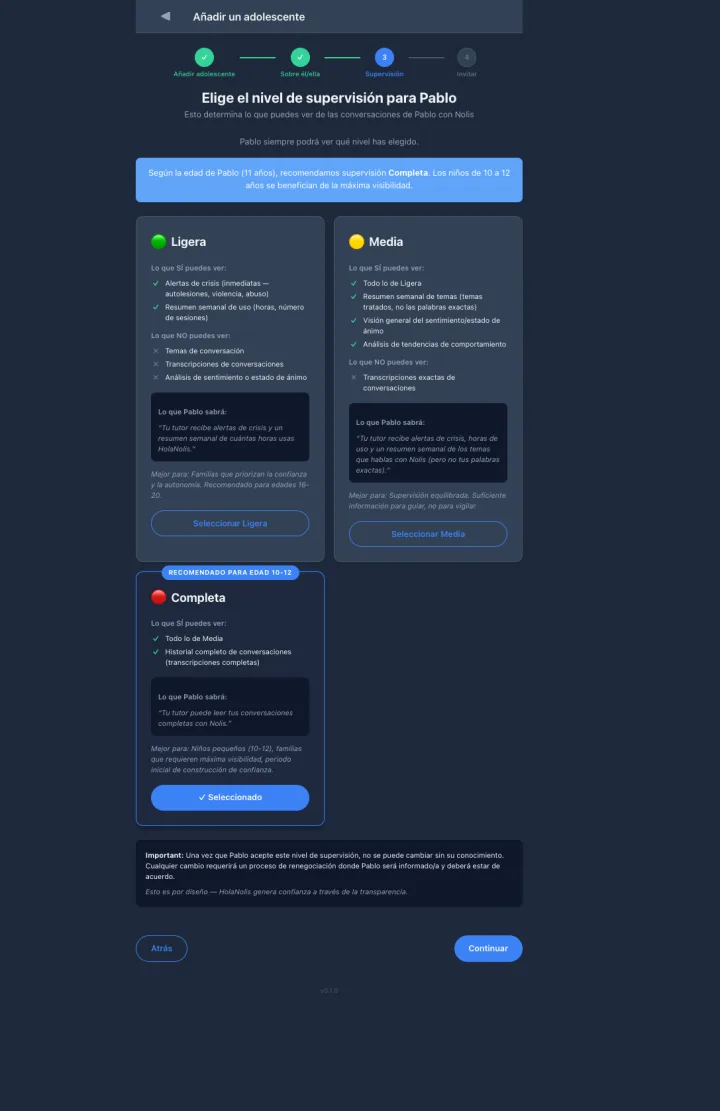
Choose the right supervision level
Everything you need for their digital safety
Crisis alerts to the family
When Nolis detects signs of serious risk (self-harm, abuse, violence…), it alerts the family immediately by email and, if enabled, by push notification. Less serious signals arrive right away or in a daily summary.
Agreed, transparent supervision
3 levels (Light, Medium, Full) to balance privacy and protection. Your child always knows which level is active.
Adapted to their age
Nolis adapts to 4 age brackets (10-12, 13-15, 16-18, 19-20), with filters and rules to reduce inappropriate content.
Homework help
Puts understanding first: it explains, asks questions and gives hints before solutions.
Conversation memory
Nolis remembers the context of previous conversations so you don't start from scratch every time.
No medical or psychological advice
Nolis is designed not to diagnose or give medical or psychological advice: it listens and points to trusted adults and support resources.
What Nolis does NOT do (and why that's better)
No medical advice
If it detects a health issue, it alerts parents and suggests consulting a professional.
No diagnoses
No mental disorders, no conditions, no diseases. It listens and redirects.
No diet recommendations
Designed to filter content that could fuel eating disorders.
No therapist role
It's a companion, not a mental health professional. It accompanies, it doesn't treat.
Filters inappropriate content
Multi-layer safety filters designed to reduce sexual, violent, or harmful content. As with any AI system, no filter is perfect.
No addictive patterns
No manipulative push notifications, no streaks, no deceptive gamification.
"The product is MORE valuable precisely because it's designed to be safe."
54% of US teens aged 13 to 17 have already used chatbots for help with schoolwork (Pew Research Center, 2026). We propose accompanying that use instead of leaving them alone with it.
For anyone under 18, HolaNolis only activates once a responsible adult is linked.
Their account only activates when a responsible adult accepts the invitation.
- AES-256-GCM encryption with a per-user key
- Main AI model hosted in the EU
- AI label always visible in the chat
Designed with the GDPR, the EU AI Act and, for the US, COPPA in mind. This is not a certification: external legal review is pending. How safety works and its limits
Situations HolaNolis is designed for
Family with a preteen
If the family decides they can use AI, the question is which tool. HolaNolis offers a supervised alternative that isn't surveillance: the teen always knows what supervision level is active and can renegotiate it.
Parent who wants to trust without spying
The weekly report gives them a general picture of use without reading the conversations: time spent and, in the panel, with Premium and Medium or Full supervision, the topics too. It doesn't replace talking as a family: no alerts doesn't guarantee everything is fine, but it helps them know when to pay closer attention.
Teen asking for more independence
At 15, they want less supervision. They can request a level change from their app; their guardian accepts or declines it, and the decision is logged. Supervision follows their maturity through conversation, not behind their back.
Is your family already using HolaNolis?
If you'd like to share your experience, write to us. Real testimonials will appear here, always with explicit consent.
Start freeSimple plans for families
Crisis alerts are ALWAYS free
Free
- 1 child
- 20 messages/day
- Light supervision only
- Crisis alerts
- Weekly email report
- Topic summaries
- Conversation history
Premium
- Up to 5 children
- Unlimited messages
- Light/Medium/Full supervision
- Crisis alerts
- Weekly email report
- Topic summaries
- Conversation history
Frequently asked questions
What is HolaNolis?
HolaNolis is an AI companion designed for children, teens and young people aged 10 to 20, with built-in family supervision. It's not a chatbot for adults adapted for kids: it was designed for these ages from the start, with their safety as the priority.
Is it safe?
It's designed to reduce risks: age-based filters and rules, a 4-layer safety pipeline, risk-signal analysis of messages and alerts to the family. No system is infallible: we explain how it works and its limits on our safety page. We designed it with the GDPR, the EU AI Act and, for the US, COPPA in mind; this is not a certification and external legal review is pending.
What supervision levels exist?
Light (crisis alerts + usage hours) and, with Premium or during the 14-day trial, Medium (+ topic summaries + sentiment analysis) and Full (+ complete conversation history). Your child always sees which supervision level is active — no surprises.
Does Nolis give medical or psychological advice?
No. Nolis is designed not to diagnose or give medical or psychological advice: it listens, detects risk signals, alerts the family when appropriate and points to trusted adults and professionals. It's a companion, not an advisor.
What if my child is in crisis?
When Nolis detects signs of serious risk, it responds with empathy and alerts the family immediately by email and, if enabled, by push notification. For signs of suicidal ideation or self-harm, it also offers them help resources, such as a helpline. Less serious signals arrive right away or in a daily summary. No system is infallible: no alerts doesn't guarantee everything is fine. Crisis alerts are free on all plans.
How much does it cost?
The free plan includes 20 messages per day and crisis alerts. Premium costs €8.99/month, can be tried free for 14 days without a card, and includes unlimited messages, up to 5 kids and advanced reports.
What ages is it for?
For children, teens and young people aged 10 to 20, with 4 adaptive age brackets (10-12, 13-15, 16-18, 19-20). The AI adapts its language, humour and complexity to each age. Anyone under 18 always needs a responsible adult; from 18, young people decide about their own supervision.
Can both parents see the family panel?
Not yet. Today each child is linked to a single guardian, who sees the panel and receives the alerts. If your family needs two guardians, tell us through the contact form: it helps us prioritise it.